top of page
Kiyana Dubard, MA
Strategic Communicator |Systems Thinker |Document Specialist |People Leader
I analyze how people interact with systems and translate those insights into product strategy, user research, and clear communication.
CenturyLink Mailroom Operations Manual (revised and adapted for Arlington, VA site)
As the sole operator of a corporate mailroom serving a multi-floor CenturyLink facility, I audited, revised, and localized a national operations manual to reflect the specific workflows, carrier schedules, and compliance requirements of the Arlington site. This meant translating high-level corporate policy into clear, step-by-step procedural documentation — covering everything from accountable mail tracking in proprietary tools to outbound UPS processing, chain-of-custody for checks, and emergency response protocols.
I also authored eight site-specific procedures not present in the original document, effectively building out an entire supplementary section from scratch. The result was a living reference document that made a complex, time-sensitive operation auditable, trainable, and resilient — the kind of infrastructure-level content work that keeps organizations running even when no one is watching.

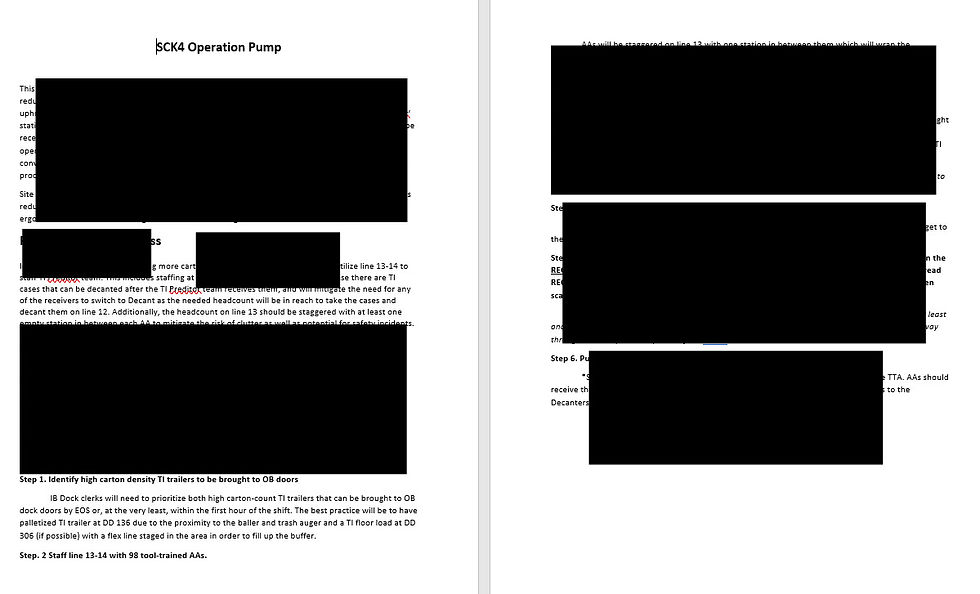
SCK4 Operation Pump — Inbound Carton Processing Initiative (process documentation, Amazon SCK4)
While managing inbound operations at Amazon's SCK4 facility, I designed and documented an experimental production strategy aimed at increasing offline carton output and clearing elevated backlog — without disrupting existing dock operations. Working under senior leadership direction, I translated a novel, site-specific workflow into a structured process document that covered staffing models, headcount allocation, equipment logistics, and a step-by-step operational procedure for associates using a proprietary tool.
Because this was an untested initiative, the documentation had to do double duty: it served as both a blueprint for execution and a standardization reference that could be handed off and replicated consistently across all four shifts. The result was a clear, actionable document that made an improvised solution operational — turning a one-time experiment into a repeatable, trackable process with measurable output targets.
Project Torus — Damaged Tote Reduction Initiative (process documentation & stakeholder communication, Amazon IXD Network)
As the lead on a regional cross-site initiative, I developed the documentation and communication infrastructure behind a process redesign that reduced dwelling damaged tote trailers from 257 to 99 across multiple IXD sites over eight months — recovering an estimated $500K in unnecessary transportation costs caused by sites shipping out trailers containing up to 45% functional totes. My work on this project had two distinct layers: I authored the standardized SOP that gave RPND managers clear, measurable qualification criteria for broken totes, palletization protocols, and shift-level accountability standards, turning an inconsistently enforced process into one with defined thresholds and auditable expectations.


In parallel, I maintained stakeholder alignment across sites through biweekly flash reports distributed via Outlook, creating a communication cadence that kept regional leadership informed and kept individual sites accountable to shared progress metrics. This project is a case study in how documentation and strategic communication work together — the SOP changed behavior on the floor, and the reporting framework made sure the right people could see it working.
bottom of page